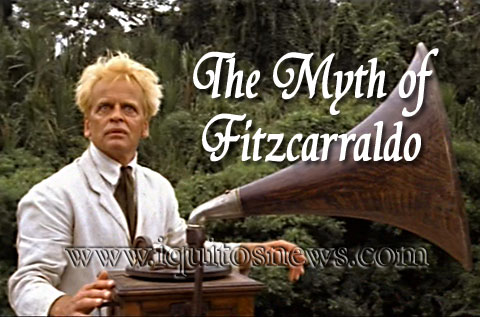
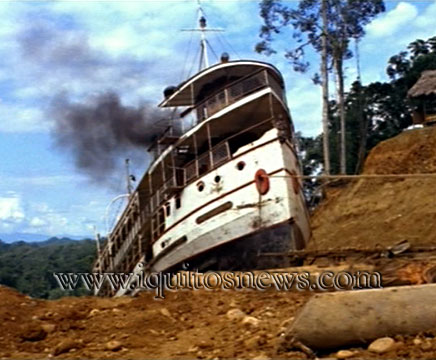
he film Fitzcarraldo has been billed as the true story of an eccentric Irishman, Brian Sweeney Fitzgerald, who sought his fortune as a rubber baron in the Peruvian Amazon. According to the film, the locals could not pronounce Fitzgerald, hence they called him Fitzcarraldo. This film by Werner Herzog, which stars Klaus Kinski and Claudia Cardinale, documents an incredible ordeal that involved moving a 340-ton steam ship over a mountain without the use of special effects.
 In
reality, there never was a Brian Sweeney Fitzgerald in Peru and no one (except
for Herzog) ever tried to move an intact 340-ton steam ship over a mountain. The
truth of the matter is that there was a Peruvian named Carlos Fermin
Fitzcarrald, a rubber baron who lived in Iquitos. According to the
Municipality of Carlos Fermín Fitzcarrald, Carlos Fermín Fitzcarrald
was the son of an American (not Irish) father and a Peruvian mother. Indeed
Fitzcarrald did move a steam ship over a mountain, but he had sense enough to dismantle it and take it piece by piece, unlike the director Herzog who had an indigenous crew transport the ship intact. In
reality, there never was a Brian Sweeney Fitzgerald in Peru and no one (except
for Herzog) ever tried to move an intact 340-ton steam ship over a mountain. The
truth of the matter is that there was a Peruvian named Carlos Fermin
Fitzcarrald, a rubber baron who lived in Iquitos. According to the
Municipality of Carlos Fermín Fitzcarrald, Carlos Fermín Fitzcarrald
was the son of an American (not Irish) father and a Peruvian mother. Indeed
Fitzcarrald did move a steam ship over a mountain, but he had sense enough to dismantle it and take it piece by piece, unlike the director Herzog who had an indigenous crew transport the ship intact.
It is hard to tell which was more incredible, the true story of Carlos Fermin Fitzcarrald or the making of the film
Fitzcarraldo. Carlos Fermin Fitzcarrald in no way resembled the benevolent character of the movie. He was a brutal rubber baron who when he encountered indigenous people gave them the choice to work for him under cruel conditions or die. Yes, if they refused to work for him, they were executed! Despite his brutality, he was a innovative explorer. He pioneered and explored the Madre de Dios region of
 Peru. Indeed, he founded the City of Puerto Maldonado and explored the area that is now the Manu Biosphere Reserve. To achieve this, it was necessary to transport his steam ship piece by piece over the mountains to the Madre de Dios basin. Fitzcarrald discovered an overland passage between the Rio Mishagua, a tributary of the Rio Urubamba and the Rio Manu, a tributary of the Rio Madre de Dios. This passage became known as the Isthmus of Fitzcarrald and permitted the exportation of rubber from the Madre de Dios region to the Ucayali River (a tributary of the Amazon River). In fact if you visit
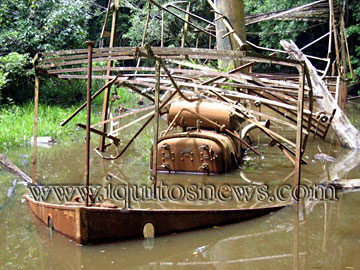
Puerto Maldonaldo, you can view the sunken remains of his steam ship, the
Contamana (no, he never had a ship named Molly Aida as in the film). Carlos Fermin Fitzcarrald died at the age of 35 during the accident that sank his ship. Peru. Indeed, he founded the City of Puerto Maldonado and explored the area that is now the Manu Biosphere Reserve. To achieve this, it was necessary to transport his steam ship piece by piece over the mountains to the Madre de Dios basin. Fitzcarrald discovered an overland passage between the Rio Mishagua, a tributary of the Rio Urubamba and the Rio Manu, a tributary of the Rio Madre de Dios. This passage became known as the Isthmus of Fitzcarrald and permitted the exportation of rubber from the Madre de Dios region to the Ucayali River (a tributary of the Amazon River). In fact if you visit
Puerto Maldonaldo, you can view the sunken remains of his steam ship, the
Contamana (no, he never had a ship named Molly Aida as in the film). Carlos Fermin Fitzcarrald died at the age of 35 during the accident that sank his ship.
 Similarly, Klaus Kinski, almost gave up his life during the filming of
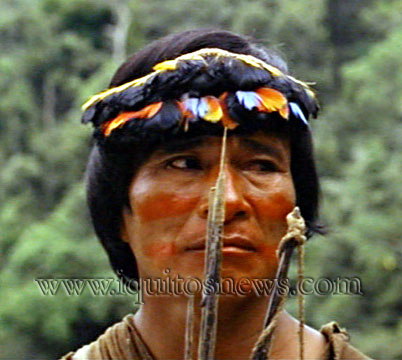
Fitzcarraldo. Known as a temperamental actor, he constantly argued with Herzog and he threatened to leave the film set before finishing. Kinski was a constant source of tension as he argued with Herzog and other members of the film crew. Moreover, he seriously upset the indigenous extras. In his
German-language documentary film
My Best Fiend (German: Mein liebster Feind, literally My Dearest
Enemy), Herzog tells how one of the indigenous chiefs offered to kill Kinski for him. In addition, Herzog relates how he himself threatened Kinski and told the cantankerous actor that if Kinski proceeded with his threat to leave the set, that Herzog would kill Kinski and then commit suicide. Similarly, Klaus Kinski, almost gave up his life during the filming of
Fitzcarraldo. Known as a temperamental actor, he constantly argued with Herzog and he threatened to leave the film set before finishing. Kinski was a constant source of tension as he argued with Herzog and other members of the film crew. Moreover, he seriously upset the indigenous extras. In his
German-language documentary film
My Best Fiend (German: Mein liebster Feind, literally My Dearest
Enemy), Herzog tells how one of the indigenous chiefs offered to kill Kinski for him. In addition, Herzog relates how he himself threatened Kinski and told the cantankerous actor that if Kinski proceeded with his threat to leave the set, that Herzog would kill Kinski and then commit suicide.
The movie Fitzcarraldo originally casted Jason Robards in the title role. However, Robards became sick during the filming and was subsequently replaced by Klaus Kinski. Interestingly, Mick Jagger of Rolling Stones fame originally had a role playing Fitzcarraldo's assistant. When Robards left due to illness, almost half of the film had already been shot. With the loss of Jason Robards, the entire film had to be reshot from the beginning. More bad luck followed when Mick Jagger left the film to go on tour with the Stones. Subsequently, Jagger's character was deleted from the reshoot. At one point, Werner Herzog himself considered playing the character of Fitzcarraldo. Eventually, Klaus Kinski agreed to play the part. The film was then reshot in German, rather than the original english.
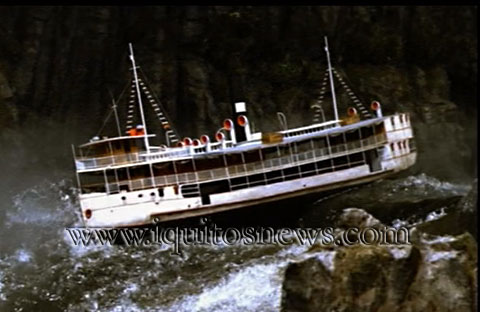 Fitzcarraldo is said to be one of the most difficult films ever to have been made. A large part of the difficultly involved the incredible ordeal of moving a 340-ton steam ship over a mountain without the benefit of special effects. In addition, during the filming of the "rapids" sequence, scenes were shot on board the ship as it crashed through rapids and white water, thereby injuring half of the six people in the film crew. Werner Herzog, after completing this unique and difficult film, won Best Director at the Cannes Film Festival. The documentary
Burden of Dreams by Les Blank is about the making of the film Fitzcarraldo. Fitzcarraldo is said to be one of the most difficult films ever to have been made. A large part of the difficultly involved the incredible ordeal of moving a 340-ton steam ship over a mountain without the benefit of special effects. In addition, during the filming of the "rapids" sequence, scenes were shot on board the ship as it crashed through rapids and white water, thereby injuring half of the six people in the film crew. Werner Herzog, after completing this unique and difficult film, won Best Director at the Cannes Film Festival. The documentary
Burden of Dreams by Les Blank is about the making of the film Fitzcarraldo.
|